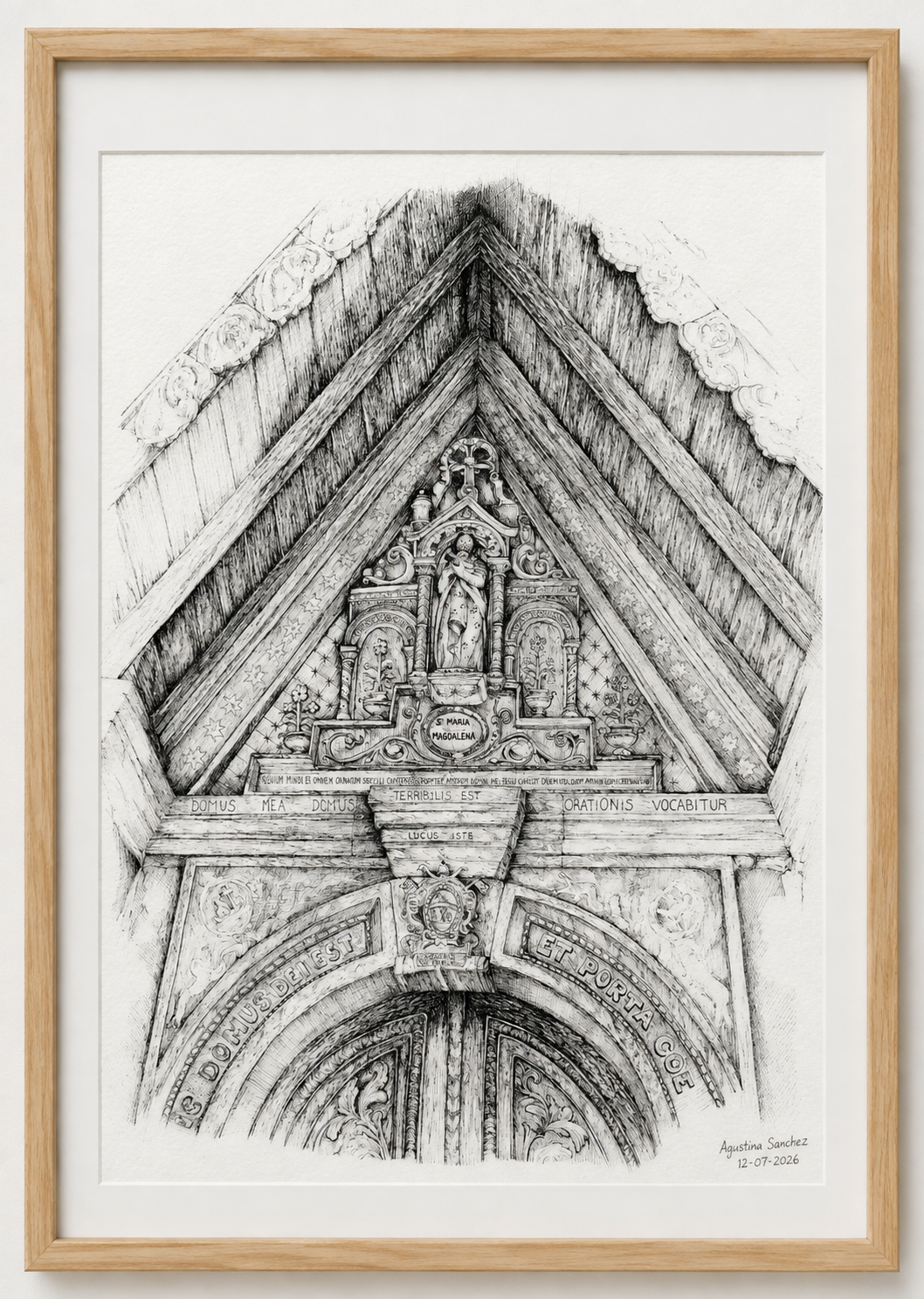
Original ink drawing
The Magdalene Waits
The Magdalene Waits
Some doors lead to sacred places.
Others, to questions without answers.
No se pudo cargar la disponibilidad de retiro
The original is one of one — once collected, it never returns.
Ver todos los detalles

The story behind
The doorway warns you: this place is terrible.
Above the entrance of the church of Rennes-le-Château, the priest who restored it had an inscription carved: TERRIBILIS EST LOCUS ISTE — “this place is terrible.” It is a line from Genesis, meant as awe rather than horror, but Saunière chose it, placed it over his own door, and let every visitor decide for themselves which meaning to take.
The church is dedicated to Mary Magdalene. She has stood at that doorway through every rumour, every excavation, every theory about what the priest found and what he paid for his silence. The village empties, the mystery doesn't. The Magdalene waits.
Her face and her hands, drawn line by line.
Her name above the warning: this place is terrible.

The process
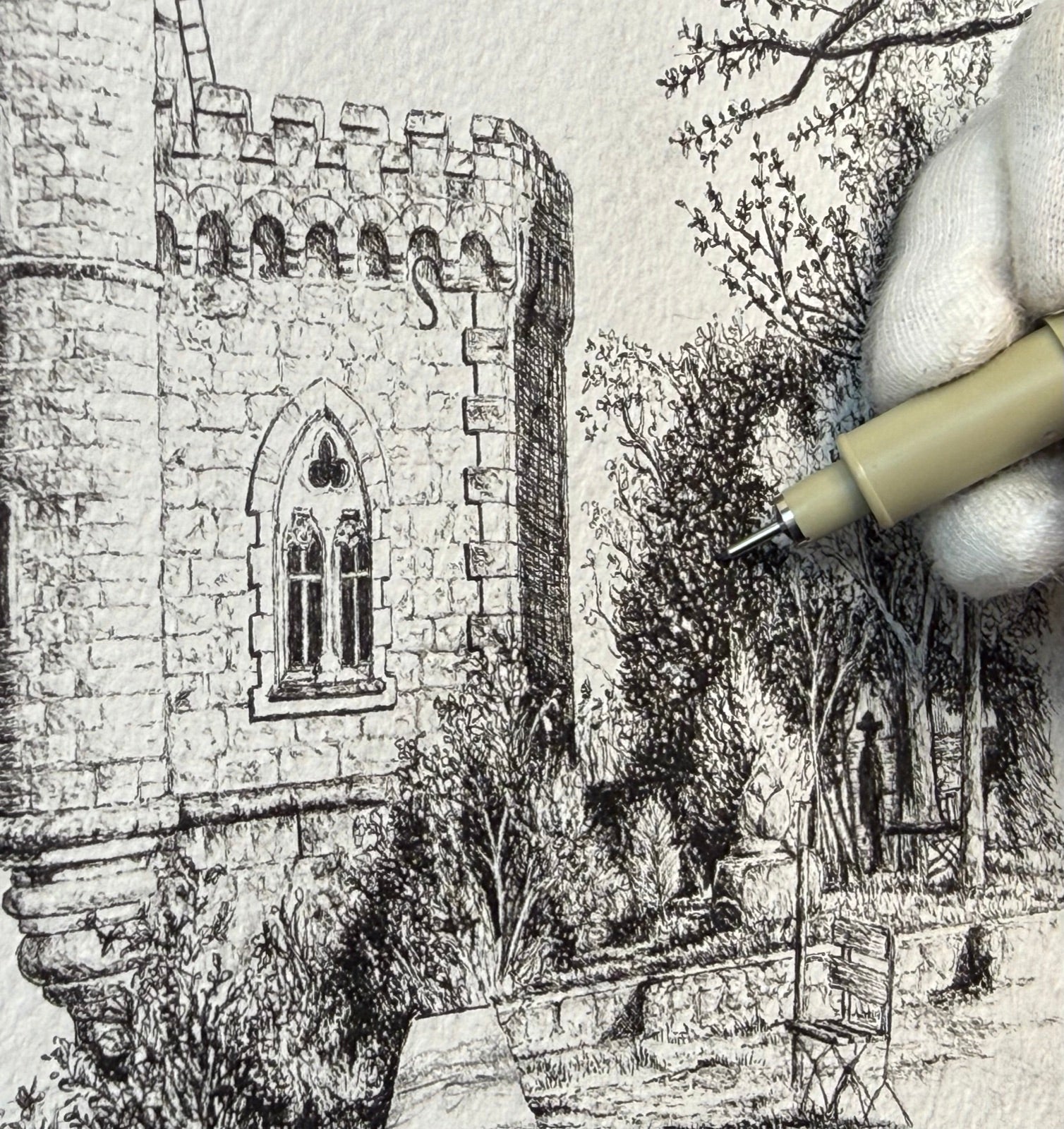
Drawn by hand. Nothing digital.
Each piece begins with an archival fineliner and weeks of hatching — thousands of intersecting strokes laid down one at a time, with no undo and no layers. There is no tablet and no filter at any stage of the original: heavyweight cotton paper, permanent lightfast ink. What you see is exactly what the pen left behind.
One drawing takes longer than most people spend reading the novel that inspired it.
Signed by the artist · Archival ink & paper · Carefully packed, ships worldwide
Contenido desplegable
Which paper is used?
The original pieces are drawn in 100% cotton paper 300gsm, and the fine art prints are made on archival cotton paper designed to last for decades without fading.
When will my artwork arrive?
Each piece is prepared and packaged carefully before shipping.
Orders are usually prepared within 2–4 working days, and delivery times depend on your location. Tracked shipping is always included.
How is my artwork packed for shipping?
Every artwork is carefully packaged with two priorities in mind: protection and presentation. Unframed works travel flat between rigid boards; framed works are corner-protected and boxed.